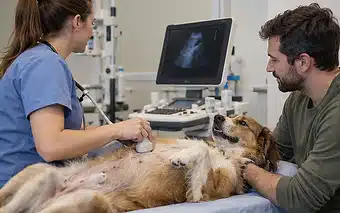
Blood and urine testing
Why it may occur
Diagnosis/staging/monitoring
Insurance check
Is laboratory testing for the eligible condition covered?

Kidney disease is a clinical category; insurance eligibility still turns on timing, history and the specific services billed.
Use these checkpoints to frame the literal question before reading the full guide.
Pet insurance can reimburse kidney-disease expenses only when the condition and services meet the current policy. Separate chronic kidney disease from an acute kidney injury or other urinary problem, identify the earliest abnormal signs or tests, and check the policy effective date. Then review diagnostics, hospitalization, medication and ongoing monitoring as separate invoice categories.
The sections below show how to verify the answer and what can change it.
Chronic kidney disease develops over time and can be detected through laboratory and clinical findings before a pet appears severely ill. Merck Veterinary Manual notes that CKD is a progressive loss of functional renal tissue and discusses staging based on evaluation and laboratory findings. For insurance, the important record is the dated sequence of signs, tests, diagnosis and treatment.

| Expense | Why it may occur | Insurance check |
|---|---|---|
| Blood and urine testing | Diagnosis/staging/monitoring | Is laboratory testing for the eligible condition covered? |
| Imaging or additional diagnostics | Investigates cause or complications | Are advanced diagnostics eligible and subject to separate rules? |
| Hospitalization/fluids | Acute decompensation or intensive support | Does inpatient care qualify for this event? |
| Medication/therapeutic diet-related items | Management varies by case | Which prescribed treatments are eligible expenses? |
| Rechecks and monitoring | Tracks progression and complications | Are chronic follow-up services reimbursable? |
Keep policy terms, deductible, reimbursement and limits beside the quote so the comparison stays consistent.
Review the cause, symptoms and services under the active policy.
Earlier evidence may be relevant to a pre-existing-condition determination.
Do not assume treatment for the existing disease will be reimbursed; read the policy definition and any condition-specific rules.
A covered condition does not necessarily make every related charge eligible. Diagnostics, hospitalization, medication, diet-related items and follow-up can be treated differently by the contract.
Keep the veterinary record and policy version together. If the insurer denies a recurring laboratory test or medication, the useful follow-up is to ask which provision controls that specific charge rather than asking whether “kidney disease” is covered in the abstract.
No. Earlier signs or abnormal tests and the policy’s pre-existing-condition definition can still matter.
Yes. Review each service category under the applicable policy rather than assuming one condition-level answer controls every bill.
No. They are different clinical situations and should be kept distinct in both medical and insurance timelines.
These links provide independent government, academic or reference background. Actual policy wording controls insurance eligibility, benefits and claims.
Keep the policy terms beside the price, then continue to rates when the comparison is clear.